

The "Smooth Surface" Secret: How to Choose a Cat-Proof Sofa
For pet owners, finding the balance between a beautiful home and a happy pet can feel like an impossible compromise. But after 20+ years in the industry, we've found that the key isn't just training—it's physics.
The "Smooth Surface" Secret:
How
to Choose a Cat-Proof
Sofa
The Science: Why Cats Scratch (And Why They Stop)
To choose the right sofa, you have to understand the goal of the scratch. Cats don't scratch to destroy; they scratch to "strop." This biological behavior is designed to strip away the dead outer sheath of their claws to reveal the sharp new nail underneath.
The Smooth Surface Theory
"In our experience, we believe that if the surface is smooth with less friction, the pet (especially the cat) will likely not scratch the sofa. They simply don't like the feeling."
For stropping to work, the claw needs to hook into the material and pull with resistance. If a surface is smooth enough, a cat's claws cannot find the purchase required to create that resistance. When they try to scratch, their paws simply slide off. Without that satisfying "grinding" sensation, the cat realizes the furniture is useless for their needs and moves on.
The Material Guide
Select a material to read our research and see the "Friction Test" in action.
Leather: The Friction Test
Leather is often cited as the best choice for pets, but there is a catch: not all leather works. The success of leather depends entirely on its finishing.
Some leathers, particularly raw or heavy-grain types, provide a surprising amount of friction. While these textures feel rich and luxurious to us, they offer just enough "drag" for a cat to sink their claws in.
You might see some customers reflect that their cat only scratches on their luxury sofa instead of other furniture. It is not because they want to damage your luxury sofa. It is because the friction of the leather provides a very good place for them to grind their nails.
The Finger Rub Test
You can use your finger to rub on the leather with some force to feel the friction.
- Smooth/Slip: If the feeling is smooth and slippery, the cat will more likely not scratch the sofa.
- Drag/Resistance: If you feel friction, your cat will feel it too, and they may use it to grind their nails.
! Try the Finger Rub Test
Drag/Swipe on the bars below to simulate friction.
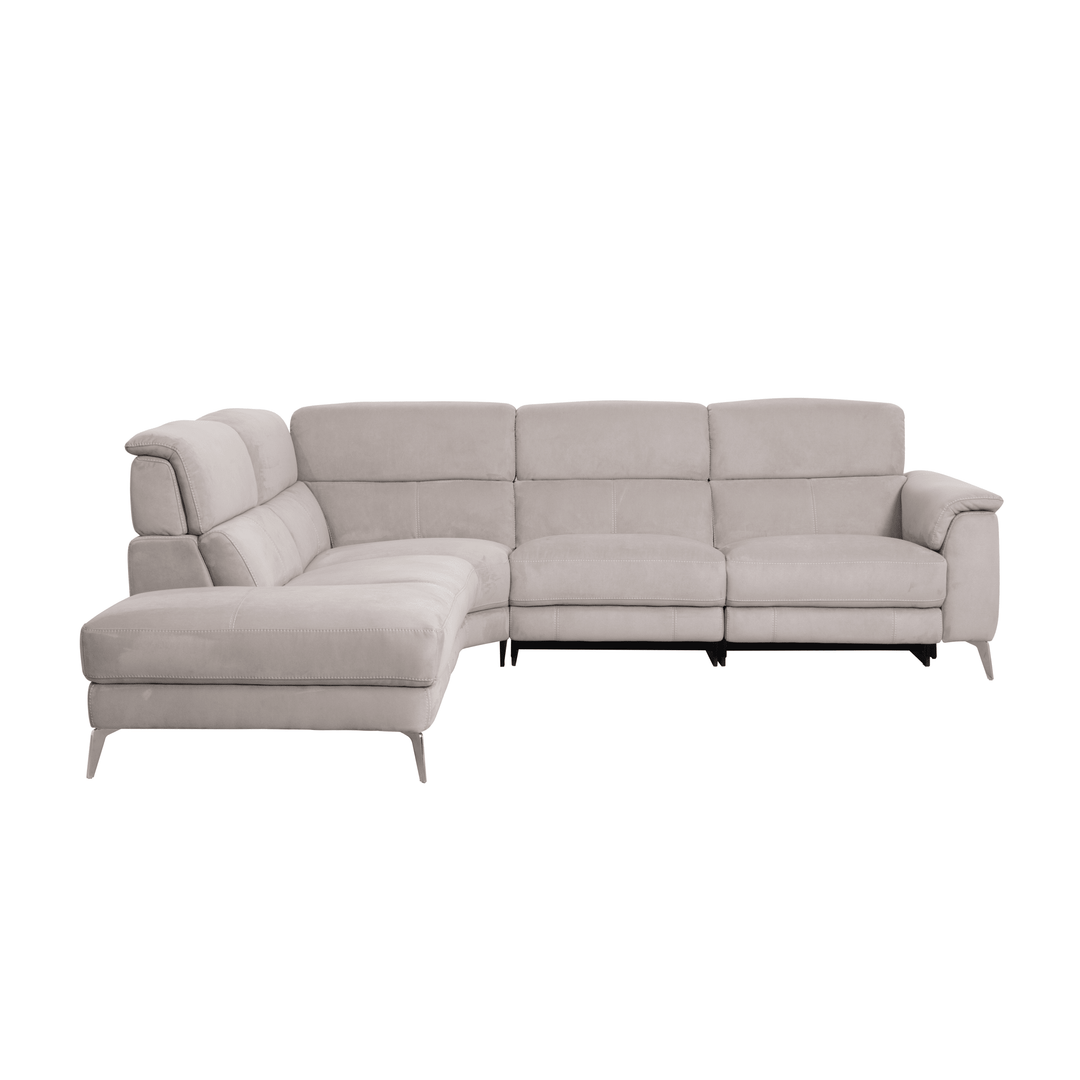
Jenny Power Motion Sectional
Finished with a sleek, protected surface designed to pass the friction test. The smooth finish encourages cats to take their manicure elsewhere.
View ProductPerformance Velvet: The "Cut Pile" Trick
Velvet is often misunderstood as delicate, but in the world of pet-friendly design, it is a powerhouse. Unlike traditional woven fabrics that are made of interlocking loops (which claws love to catch), velvet is a "cut pile" fabric.
Imagine the fabric structure like a dense forest. The fibers stand vertically. When a cat scratches velvet, their claws tend to slip between the fibers rather than catching on them.
This creates a "slip" effect similar to smooth leather but with a softer, cozier feel for you. The most important part is to make the pet not like to scratch on it, and velvet achieves this by denying them the hook they need.
Fabric Structure Comparison
Claws hook easily
Claws slip between

Lumens Velvet 3-Seater
Features a dense velvet pile that is difficult for claws to penetrate. Deep channel tufting also keeps the fabric tight, preventing pinching.
View ProductTech Fabrics: The Tight Weave
If leather or velvet isn't your style, look for synthetic "pet-friendly" fabrics engineered with a microscopic weave density.
Materials like microfiber are woven so tightly that claws physically cannot penetrate the surface to create a snag. The material of a pet-friendly sofa is not just about being thicker or anti-scratch; it is about texture.
Because these fabrics are smooth and offer less friction, the pet (especially the cat) will more likely not scratch. They don't like the feeling on nail grinding, and they think they can't grind the nail on those kinds of materials.
Why Tech Fabrics Work
-
✓
Micro-Weave: Gaps between threads are too small for claws.
-
✓
Low Friction: Surface texture discourages grinding.
-
✓
Durability: Stands up to the "zoomies."

Resilient 2.5 Seater (LADOGA)
Designed with a water-resistant, high-abrasion fabric. The lack of texture means your cat is likely to ignore it.
View ProductThe Scratchability Index
Based on our research, here is how different materials rank. We want to avoid high friction (Grip) and maximize slip.
Summary Checklist for Pet Owners
Check for Loops
If you can see individual woven loops (like in linen or tweed), your cat can hook them. Avoid these.
Feel the Friction
Whether it's fabric or leather, run your hand across it. If it feels slick or smooth, it is likely cat-safe. If it grabs your skin, it will grab their claws.
Provide a "Yes"
Always place a rough scratching post (sisal or cardboard) near your smooth sofa. You must give your cat a high-friction alternative.